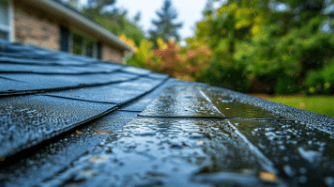
A roof edge does more than finish the outline of a house. It has to guide water off the surface, protect the wood below, and hold its shape when weather puts stress on the outermost sections. That is why edge problems often lead to leaks before damage appears elsewhere on the roof. For homeowners researching roof repair brigham city, the roof edge is one of the first places worth understanding.
When water intrusion begins near the perimeter, it often starts small. A loosened shingle, a worn drip edge, or a gutter that no longer drains properly can create just enough exposure for moisture to seep beneath the roofing surface. Once that happens, the issue is no longer limited to the visible edge. Water can move into the underlayment, reach the decking, and spread into areas that are much harder to see from the ground.
Why the Roof Edge Takes More Stress Than Other Areas
The edge of a roof handles constant runoff. Every time it rains or snow melts, water moves toward that outer line. Unlike the middle of the roof, the edge also has to manage the transition from the roofing material to the gutter system. If that transition is not working properly, water can collect where it should be draining away.
Wind puts extra strain on the outer edges of a roof. Shingles along the perimeter take more direct pressure than the ones farther in, so they are often the first to loosen or lift. Once that happens, rain has an easier way in. From the ground, the roof may still look fine, even as the edges begin to wear down.
Heat and temperature changes can also weaken these areas over time. Roofing materials expand in warmer weather and contract when temperatures drop. After enough cycles, those small movements can affect how tightly the edge components fit together. That is especially true where shingles meet metal trim or where water keeps running over the same section.
How Water Gets In at the Perimeter
The drip edge is one of the most important parts along the roofline. Its job is to push water away from the fascia and into the gutter. If it is bent, rusted, missing, or poorly installed, water may flow back toward the wood instead of draining off the roof as it should. That can create moisture problems near the edge, even when the shingles do not appear badly worn.
Starter shingles also help protect this area. They secure the first row of shingles and help keep the wind from getting underneath. If they were installed poorly or have started to break down, the outer row can shift more easily. Once those shingles move, water can reach the layers below.
Gutters can make the problem worse when they stop draining properly. A clog or a section that has pulled loose can cause water to collect near the eaves instead of moving away from the roof. When moisture keeps sitting there, it has more time to work its way into vulnerable spots.
Cold weather can add to the risk. Snow may melt higher up on the roof, flow down to the edge, and then freeze again. That buildup can trap water and push it beneath the shingles. Later, a homeowner may notice a stain inside without realizing the issue started at the roofline.
Signs Homeowners Often Overlook
Water intrusion near the roof edge does not always show up as a clear leak right away. In many cases, the first signs are easy to dismiss. Shingles along the edge may look a little uneven. Paint near the roofline may start peeling. Fascia boards might show discoloration or feel soft in places. Gutters may spill over during a storm even when the rest of the roof seems to be doing its job.
The signs inside the house can be just as easy to miss. Insulation may feel damp, the upper part of a wall may show light staining, or there may be a musty smell after heavy rain. Because water can travel before it shows up, the spot you see indoors is not always directly under where it got in.
Granules in gutters can also deserve closer attention. Some granule loss is normal with age, but a heavier amount near the perimeter may suggest the edge shingles are wearing down faster than the rest of the roof. That kind of uneven wear often means the area is under more stress than it should be.
See also: Strengthen Your Growth 911773568 Digital Tools
Why Small Edge Problems Become Larger Repairs
A roof edge issue can escalate quickly because it affects multiple parts of the system simultaneously. Once water gets beneath the shingles, the underlayment may no longer be enough to keep the area dry. The roof deck can begin to absorb moisture, and wood that stays damp loses strength over time.
That is when repair costs tend to rise. What looked like a simple shingle problem may actually involve replacing damaged decking, correcting metal edge details, and checking whether nearby sections were affected too. If gutters or fascia have also been exposed to repeated moisture, the work may extend beyond the roofing surface itself.
This is why homeowners looking into roof repair brigham city should not treat the perimeter as a cosmetic area. The edge is where drainage, fastening, and material transitions all meet. When one part fails, the surrounding parts often begin to take on stress as well.
Conclusion
Roof edges tend to develop water problems faster than other parts of the roof because that is where runoff leaves the surface and where wind puts more pressure on the shingles. These areas also depend on several parts fitting together correctly, including the drip edge, starter shingles, and gutters. When one of those parts loosens, shifts, or wears down, water can get under the roofing material before the damage is obvious.
A good repair should address the source of the problem, not just the mark or leak that shows up later. Fixing edge issues early can help protect the roof deck, limit moisture spread, and keep a small repair from becoming a larger one.